Axual Architecture & Components
This guide explains how the Axual Platform fits together: the layers it is built from, the components in each layer, and the path a request takes as it moves between them.
Type |
Explanation |
Goal |
Build a mental model of the platform accurate enough to reason about a change to it |
Audience |
Anyone who needs to understand the platform’s structure, whether or not they have access to a cluster |
When to use |
Before designing an integration, sizing a deployment, or tracing where a request goes |
Architecture
The diagram below shows the platform’s components, grouped by layer, and every interaction between them.
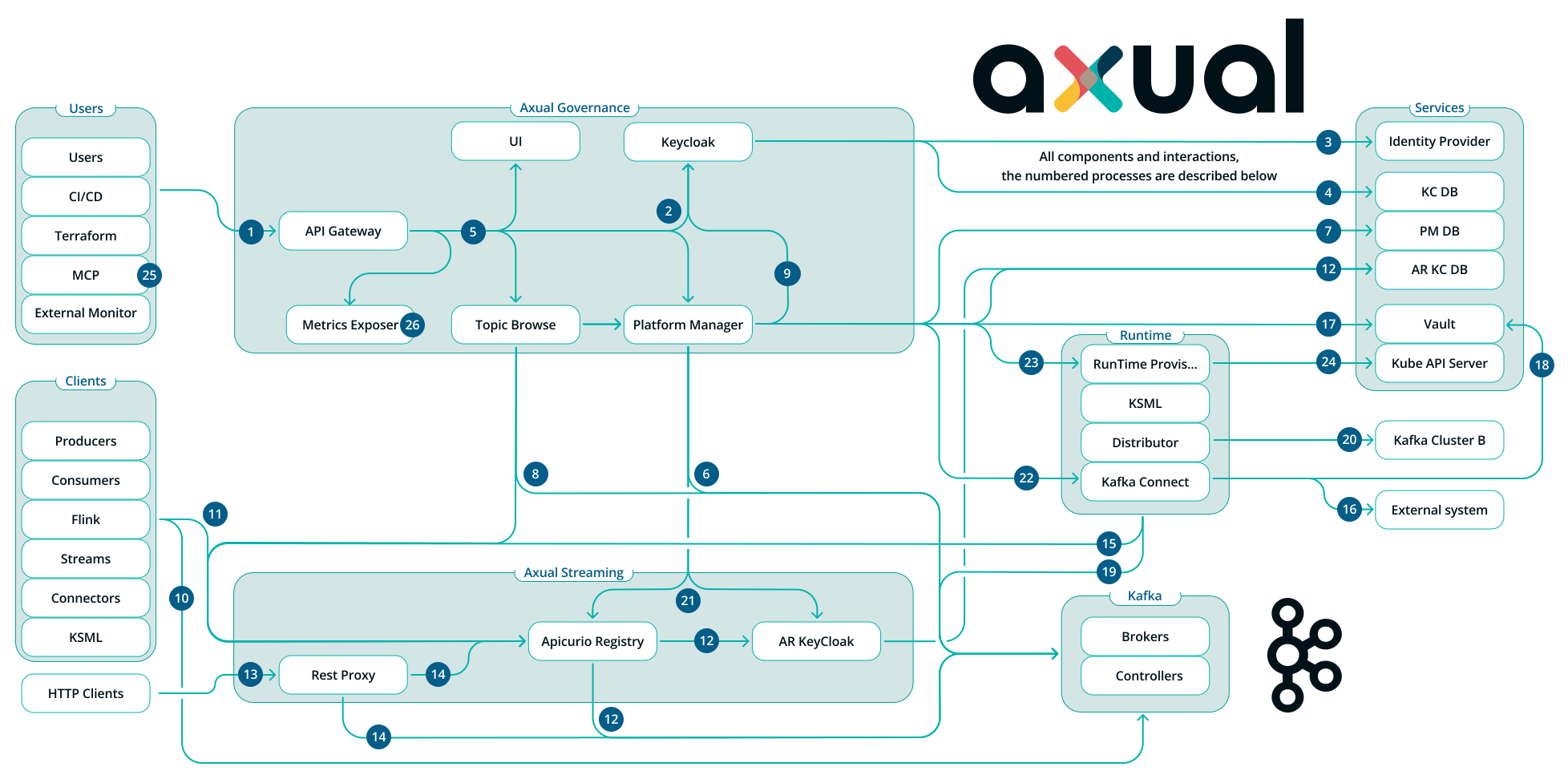
Each shaded group is one part of the platform. Users and Clients call the platform, Axual Governance and Axual Streaming hold the platform’s own layers, Runtime holds the Axual Runtime components, Kafka holds the brokers and controllers, and Services holds the external systems the platform depends on, such as the Identity Provider, the SQL databases, Vault and the Kubernetes API server.
Interactions
The numbers in the diagram mark each interaction between components. They are grouped below by the part of the platform they belong to.
Self-Service interactions
All interactions with the Governance Layer start with an HTTPS request to the API Gateway.
1 API requests arrive at the Axual API Gateway.
2 Axual API Gateway checks authentication and authorisation with
Keycloak.
3 Keycloak connects to an Identity Provider, for example LDAP or Microsoft Entra ID, over
OpenID Connect (OIDC).
4 Keycloak stores its configuration in a SQL database.
5 After interacting with Keycloak, some request bodies are modified, for example for Topic
Browse, to contain everything needed to interact with the
Platform UI, Platform Manager and Topic
Browse.
6 Platform Manager creates and
configures Kafka topics through a Kafka AdminClient, and stores schemas in the
Apicurio Registry.
7 Platform Manager stores topic metadata, users, groups, configs in a SQL database.
8 Topic Browse queries topic data of all
managed clusters and presents it to the end user.
9 Platform Manager creates realm and roles in Keycloak
Kafka interactions
The Streaming Layer carries the data itself, reached either over the Kafka protocol or over HTTP.
10 A producer or consumer application reaches the
Apache Kafka cluster using Kafka protocols on external Kafka
listeners.
11 Applications can use the Apicurio Registry to write data using AVRO, JSON or Protobuf schemas.
12 Apicurio Registry stores schemas on a topic. Schema write permissions set using Apicurio Keycloak and its SQL database
13 Applications without Kafka protocol support use the
Rest Proxy instead.
14 Rest Proxy connects to Kafka and Apicurio Registry.
15 Axual Runtime components interact with Apicurio for schemas.
16 Kafka Connect moves data into and out of
Kafka and into and out of external systems such as a message queue or a data lake.
17 Platform Manager writes credentials to Vault.
18 Connector security details are obtained from Vault.
19 Axual Runtime components interact with Kafka.
20 Axual Distributor writes data into another cluster that is synchronous with the source cluster, together forming an Axual Instance.
Other interactions
21 Platform Manager registers schemas to Apicurio Registry. Schema registration permissions are configured in Apicurio Keycloak
22 Kafka Connectors are managed through Platform Manager on a target Kafka Connect cluster.
23 Platform Manager calls the Runtime Provisioner to deploy KSML applications and to read Kafka Connect worker logs.
24 The Runtime Provisioner calls the Kubernetes API server to create the KSML application resources and to read Kafka Connect worker logs.
25 Axual MCP allows interactions with the platform through natural language, using an AI agent.
26 The Metrics Exposer gathers metric
data from Prometheus and exposes it for dashboard creation in a different datacenter.
Component overview
Each component carries a short identifier, used in Network and Port Reference.
Streaming layer
The Streaming Components hold Axual Kafka, the Kafka distribution the platform deploys, and the components that sit directly in front of it:
-
B- Brokers, Apache Kafka -
C- Controllers, Apache Kafka -
RP- Rest Proxy -
SR- Apicurio Registry
Governance layer
The Governance Components hold Self-Service, the management API and their backing services:
-
AG- API Gateway -
PM- Platform Manager -
TB- Topic Browse -
UI- Platform UI -
KC- Keycloak -
DB- Database Support -
V- Vault -
ME- Metrics Exposer
Run-time layer
The Runtime Components move and process data:
-
AC- Axual Connect -
RTP- Runtime Provisioner -
KConnect- Kafka Connect (per-tenant Connect clusters, Strimzi-managed) -
F- Flink -
KSML- KSML, applications deployed and managed byRTP
Axual Kafka
The Axual distribution of Apache Kafka, deployed by its own chart rather than abbreviated in the diagram.
Axual MCP
Axual MCP sits alongside the three layers rather than inside one:
-
MCP- Axual MCP, a natural language interface to the platform through AI agents
Network Interactions
Every network connection the platform makes, the container port it reaches and the protocol it carries are listed in Network and Port Reference, together with example NetworkPolicy manifests.
Related pages
-
Axual Platform Releases, for new features, security updates and major bugfixes per component version